

Do You Like It Raw?
How Your Headlines Are Served Makes A Big Difference.

Fair warning - this is not a Budget post!
I try to write a little in advance and Budget Day was yesterday - and now it’s been done, we have a flurry of mainstream media content going, well actually it was good and could have been worse if we had our way (Newstalk actually did frame their Friday coverage like this) or Now We Have Numbers, Lets Look At Who Actually Gets Crapped On headlines.
And the media coverage post Budget Day is almost always budget related - for obvious reasons. And it actually feeds into this week’s Newsletter a bit as well.
Because one of the many indicators that there’s an election nearing is the way media starts to behave and that’s really obvious in headlines.
These are enormously important - they set the tone, set the expectation in the reader or viewer, they pull people in and get them engaged and research shows 85% of people form an opinion based on headlines alone. If they read any further, that starts to drop.
So as a political weapon, a headline can be pretty damned important.
For some outlets who know their bias, the headlines can present misleading information to reinforce in their audience things they generally already believe and want confirmed. For outlets who try and be more unbiased in their presentation, a headline is actually a powerful way for us to see the bias of the editorial teams and decision makers.
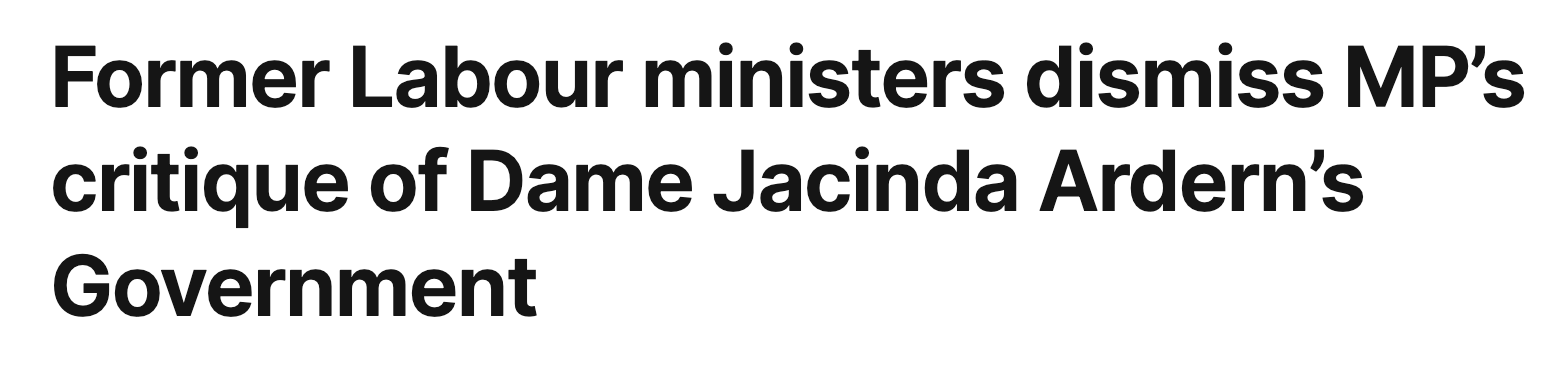
So this week I launched a new project to try and unspin the headlines on meat platforms - Instagram and Facebook. It’s pretty simplistic to be honest - I take a headline from a media outlet and then show the way it misleads. It might be like this one above from the Herald, who love to vilify Jacinda Ardern and then ask who could possibly be behind the vitriolic hate she seems to get. In reality, veteran MP Gregg O’Conner said, in an out of context leaked audio from a recent training event, that there are sometimes staff within the party who, at the time covid hit, he felt weren’t as in control and across all issues as he would like. Hardly damning but this headline is catnip to the NZME audience base.
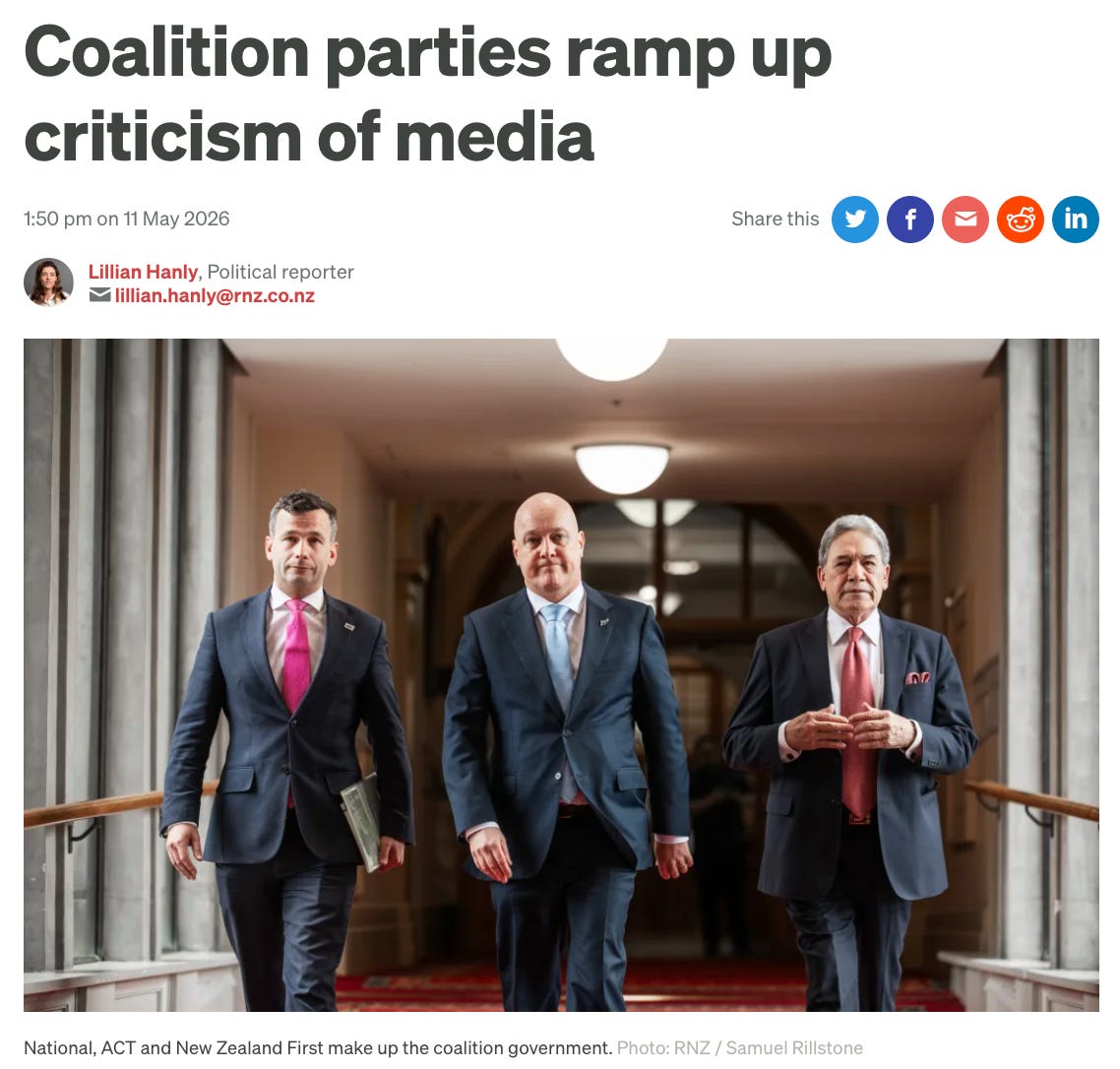
It’s been fascinating so far - the day RNZ runs stories on the million dollars in Party donations to NZ First and National from beneficiaries of the dodgy fast track approvals process, the Herald ran the O’Connor story instead. While the Herald ran hit pieces on Barb Edmonds talking about ducks and horses at the same training event, they refused to publish stories about the PM threatening John Campbell over his line of questioning when it was revealed lobbyists for Fonterra had seemingly influenced policy and law direction impacting Fonterra. RNZ ran stories that ignored the fact Golden Visa applicants have no language requirements while labourers migrating here are now getting tougher requirements. Or That Stuart Nash is running for NZ First without mentioning the specific sexist and bigoted things he had said in the past, and that context should be available for voters.
The aim here is really simple - I want people to think more critically about what’s presented to them as we go into the campaign - because National keeps straight up lying to voters and I’m sick of media following their lines.
Research done by Harvard recently showed this type of approach was far more effective than just saying “this headline is misleading” - it actually triggers a few different areas of the brain and how we understand media and the world around us.
It helps us reframe media in terms of accuracy over our own identity. Basically, when we skim a headline, we don’t ask “is this correct” we ask “does this back up my world view”. This action sets off a cognitive shift that disrupts the illusory truth effect where we believe something because it is repeated so often no matter how accurate it is - like when National keeps claiming they fixed ram raids when they did squat and the data shows that.
It’s also designed to help viewers start to recognise how framing can expose bias. Words have power and in headlines they have a lot of power. In 2023, research from Rochester showed framing of identical stories in different ways impacted our brain chemistry when shown side by side to give people the tools to better mitigate the impacts of bias presentations. It might be something that seems simple - like the use of the word laws instead of rights, or treaty obligations instead of treaty rights.
But believe it or not there is a risk involved here.
There’s a chance of a backfire here - we are so ingrained usually with our ideologgy and world view that being presented with something that shakes that in any way can lead to something called hostile media phenomenon - their brain interprets the correction as an attack on their identity. The more partisan someone is in their views, the more likely they are to see anything that brings into question their world view as presented, as a personal attack on them. Just see what happens when you visit a media outlets comments section and tell them how wrong they are with data and evidence - you can hear the springs break and cogs snap.
There’s also an issue with creating an army of cynics.
Long term exposure can actually increase distrust in some media outlets. For some outlets - the ones out there celebrating the end of the BSA for example, that distrust is probably warranted and more of it is needed. But there are outlets who do work to bring audiences news and information that this might end up making people think none of their content can be trusted. Healthy skepticism is good - blanket scepticism is not. That’s one reason why I’m trying to find a range of sources, so viewers can see this happens across all media and it’s not a flood of examples, just a few each day.
Now, I’m under no illusion that this will change the dial on the election outcome - these outlets are getting hundreds of thousands, maybe a million views a day. I get a million a month. And even then, the research shows short debunks are highly impactful in fighting a specific claim but much less successful in changing long term viewing habits and increasing skills to help better think critically about media. But what it should do is help loosen a few of the narratives we see that help keep people seeing the world from their ideological viewpoint. By showing system data omissions and manipulation, selective contextualising of sources and government friendly narrative framing, and my own bias is actually a concern here as well. I’ve never denied my bias and that makes it impossible for some people on the hard right to actually accept anything I say as accurate no matter the mountains of evidence or data I might provide. For some of them, god herself showing up and saying “Paul is right” still wouldn’t be enough.
But I’ll keep it up between now and the election - we will see narrative changes at key points along the campaign as well. Budget Day this week (this was written before that so I have no idea of the actual framing being used), the Campaign regulatory period in August will change approaches, so will the release of PREFU. Language is so important in helping us understand the word but also what we are not shown is just as important and much harder to spot. So hopefully this little experiment will pay off.
I guess we really just need to wait and see now. While we’re doing that though - please head to vote.nz and check those details to vote are up to date!