

Sifting Through The Laundry
We need to get better at spotting Astroturfs at work

The politics of Aotearoa New Zealand is beset by Astroturfs - fake grass roots organisations and their people pushing narratives that are really there to promote a specific political or commercial perspective like it’s something we all should be concerned about. I’m sure most of the readers of this will be aware of the situation, but I was reminded this week that not everyone is a political tragic like me, when giving a guest lecture at Auckland Uni hard from students there that they had heard of groups like the Tax Payers Union, The NZ Initiative, the Sensible Sentencing Trust and assumed they were legitimate organisations with benevolent views because that’s how they’re presented to them by news media.
Over the past 6 months we have seen these groups and some of the people involved in them, given a direct pipeline into the homes of unsuspecting voters through what we call laundered data - basically a piece of data they put out and get mainstream media to legitimise by publishing it.
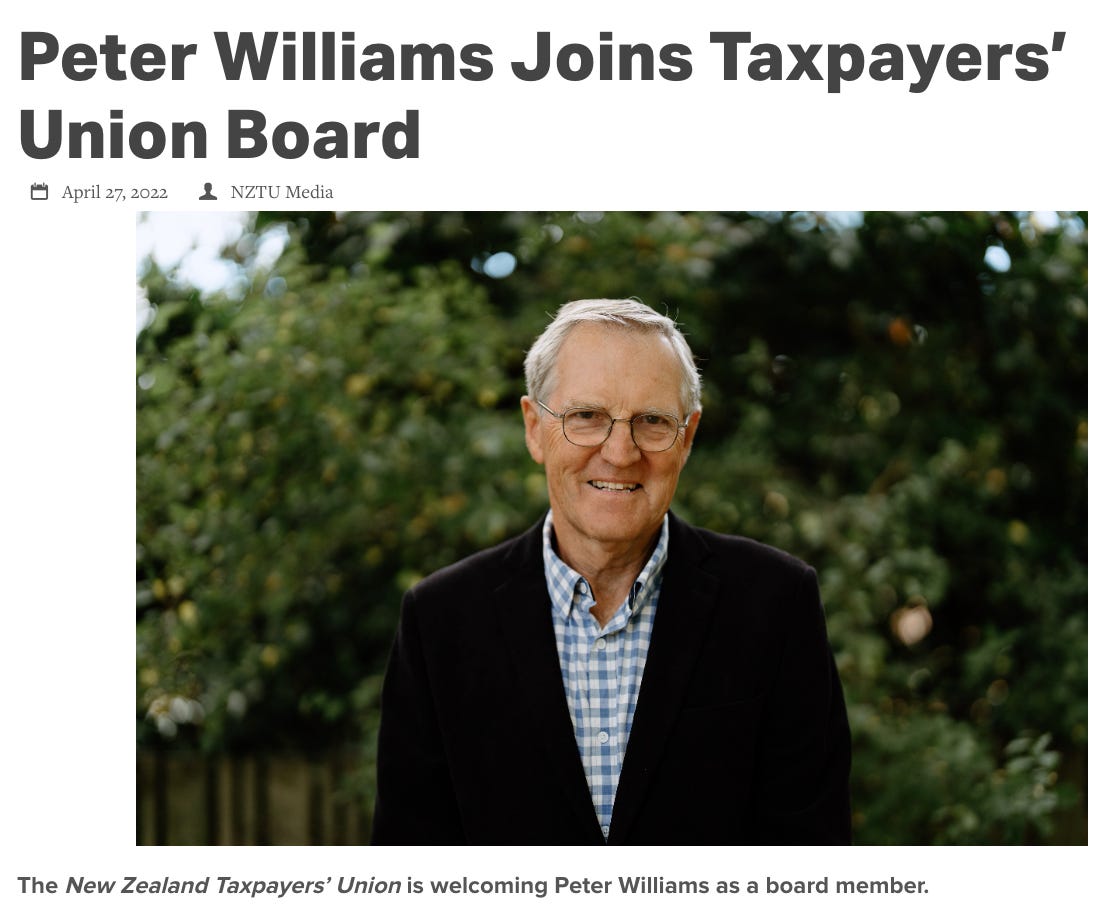
As MSM resources dwindle, the power and ability of well funded Astroturf groups to do this increases - because we still consume as much, if not more, news than we used to a decade ago but there’s now 60% fewer people working in media than there was a decade ago, so when a group shows up with data and says “here’s some free stuff you can use”, media often jumps at it.
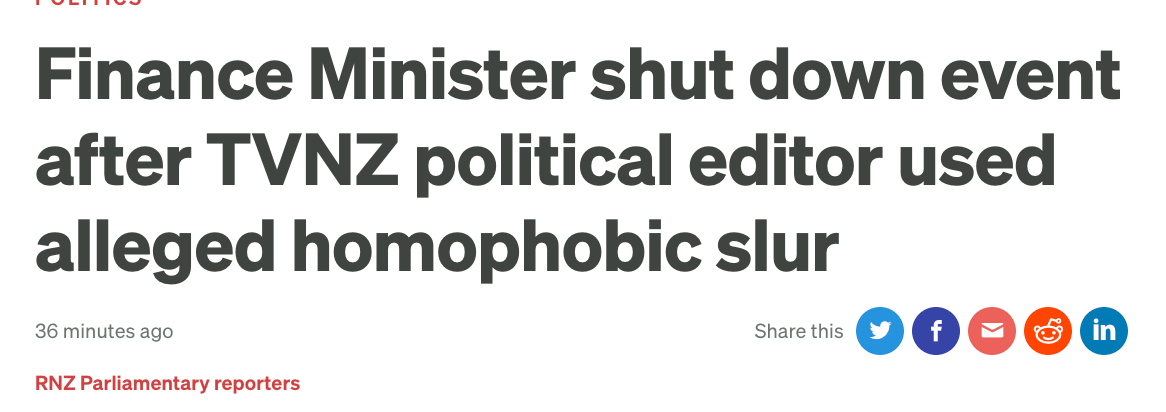
This week we’ve seen it in action as the pipeline from angry twitter reckon, to astroturf linked former staffer to MP mentioned in Dirty Politics who also hates trans people and now works for groups like the Free Speech Union and Hobsons Pledge, to uncritical reporting on “alleged” events that vilify media the government specifically wants to delegitimatise. The source is questionable, the content is questionable, the framing is questionable - even the Herald describing the self confessed TERF as a “woman’s rights activist” shows you exactly how some MSM are sanitising their source while vilifying others in a year old story that raises a heap of questions for the public.
But this year we’ve also seen reports claiming inequality isn’t as bad as we think - based on out of date and selective treasury data. The Tax Payers Union report claimed inequality peaked in 2013 - and any talk of rising inequality was just a myth but it focused on wage gaps, not ownership gaps, it used a pre-GFC 2007 report as a baseline, and ignores treasuries findings that inequality growth here is largely driven by demographics, not economic fairness.
There’s been the TPU Green with Envy report (How that title isn’t already a clear bias in play that media didn’t spot might explain why this keeps happening so often) that was laundered through property and agricultural journals to frame the Green party tax policy as a raid on family homes (it isn’t, but many advertisers in these trades are funders for the coalition already), and earlier this month regional news publications started pushing TPU content pushing for MP pay freezes and a poll that wasn’t a poll that said there was more support for a right bloc than a left bloc in government.
These are all examples of what is known as churnalism - a high turn over of pre-made content handed to the media. And it’s a tool suggested by the Atlas Network (although not by that name, churnalism is a bit too crude for a group wanting an air of class), to shift the overton window in the countries their members operate in. They prefer to call it “story on a plate” that “reduces the friction” for journalists. They train organisations to move away from wonky policy details and to find emotional connections and values based story telling. If we look at how the content from astroturfs over the past 6 weeks alone, we can see how the emotional connection is used to frame content. There’s the outrage of a homophobic slur, terms like ‘corporate welfare’ in stories they’ve pushed on insulation grants for retirement villages, they pushed a a warning about national security from the New Zealand Initiative as a neutral military analysis, Groundswell keep claiming to be a “rural lobby group” despite being taken over by conspiracy theorists with clearly partisan views fighting to allow farmers they support to ignore environmental issues and regulations so they can pollute more. Even that story about inequality - a topic that’s highly emotive and clearly visible in any urban area, is designed to pull on some emotional connection.

So we know astroturfs and their staff are highly successful - their churnalism proliferates our media at every level, they corner the SEO market like no one else, and they’re great at what’s known as a pincer move (big report from official sounding organisation like a Union or Initiative coupled with local made up outrage to back up their big report) - so what do we do about it?
Well we need to stop being passive in how we consume news and start getting active in how we navigate news.
Keep an eye out for the following red flags
The expert without a home (Policy analyst or Senior Fellow from a group you’ve never heard of)
The Story on a Plate Vibe - it reads like bullet points, the graphics look packaged and different to the rest of graphics on the site or in the publication.
The Adjective Overload - Because these pieces want to connect emotionally with audiences, they use a heap of adjectives in headlines like “The Wealth tax Fantasy” or the “Death tax Threat”.
And learn how to SIFT your content:
Stop
Investigate the source
Find trusted coverage
Trace claims, quotes and media back to it’s original context
And how do we make sure the impacts of these Churnalistic Pieces are minimised?
Well you can always call it out - but you catch more flies with honey (which I’ve always thought was a weird saying, I don’t know if I’ve ever seen flies hanging around honey but they do seem to like fermenting stuff with acidic smells).
Instead of reacting with “fake news” style comments, point out that source and the fact it is a clearly partisan lobby group, not the neutral body it’s claiming to be. You can always reach out to the producers of media and point out you’re concerned they’ve been played (some may not know and others like NZME News titles, will probably be aware and not care but if audiences show the producers what they want, the producers should take that on board).
And support humans doing stuff locally, or independently when you can - the 2026 Trust in News report from AUT showed audiences trust content clearly made by humans far more than content reliant on churned content - whether that’s an astroturfs laundered report telling you not to trust your own eyes or an AI slop made image cashing in on whatever is in the news that day. Genuine journalism should have multiple perspectives, cites original data with caveats and has some sense of nuance and explanation in its tone and delivery.
I know this probably feels like another layer of “oh fuck” for the election year - we are 6 months away from advance voting opening and we are already seeing dirty politics in play, campaigns built around lies, disinformation and vibes from the right while media loses it’s ability to hold power to account and the resources to push back against the bullshit. Which is why we need to realise that we don’t all have the skills, that we weren’t given the ability to learn them from a young age, to spot the holes in the systems being exploited to exploit us to vote against our own best interests. But we can still learn, and use that to help sift through the laundry and find the truth out there.
Thanks Paul...keep up the critical onjective reporting and analysis.
Thanks for the timely warnings Paul.